Weather here has teeth
Santa Clara County logged 298 severe weather events between 2015 and 2024, with damaging wind behind 257 of them. Hail hit 33 times. None of that is rare weather for this area, it's the normal mix.
Takes about a minute. No obligation.
Santa Clara County logged 298 severe weather events between 2015 and 2024, with damaging wind behind 257 of them. Hail hit 33 times. None of that is rare weather for this area, it's the normal mix.
17% of California households lost power for a day or more in 2024. A furnace needs electricity to run even when the fuel is gas, so the blower, the control board and the igniter all stop in an outage. A new system is worth planning around that.
NOAA nClimDiv, 1991–2020 normals
Furnaces here run about seven months a year, November through May.
A furnace idle most of the year doesn't need the top efficiency model, just one that starts reliably when it's needed.



Natural gas ran $18.44 per million Btu in California in 2024. Gas here isn't cheap, but electricity costs more, which is why a gas furnace makes sense in the first place. It also means the top efficiency model on the shelf won't earn back its extra cost as fast as it would somewhere with pricier gas. A mid-efficiency furnace already does the job for less money up front, and it's the same furnace that's sitting idle most of the year anyway. What matters more here is that it starts every time, including right after the power comes back on.
Ask where the new furnace goes and what backs it up if the power drops. A gas furnace still needs electricity for the blower, the control board and the igniter, so an outage stops it the same as any electric system. Worth asking your contractor what happens to heat and hot water when the power's out, and what a battery or generator setup would take to add now, while the install is already underway.
Find a contractor
Seven months of heat a year is a light schedule for a furnace. The rest of the year it sits idle. That kind of duty cycle means less wear on the heat exchanger and the blower motor than a furnace would see running closer to year round, and it's one more reason a well-built mid-efficiency system holds up fine here. When something does go wrong with a furnace in this county, it's rarely because the machine got worked too hard. It's a part that failed or a system nobody serviced.
A contractor sizes a furnace to the house with a load calculation, not by matching the old unit. Too big and it short cycles, wearing the heat exchanger and the blower motor early. Too small and it runs constantly without reaching temperature. The right size depends on square footage, insulation, window area and duct layout, and that calculation shapes which unit fits before price ever comes up.
A new furnace moves a different volume of air than the one it replaces, and old ductwork does not always keep up. Cracked seams, crushed runs or ducts sized for a smaller unit force a contractor to repair or resize them before the new furnace can heat evenly. That work is separate from the furnace itself, and skipping it leaves rooms that never get warm no matter how good the new unit is.
Estimates for a typical Santa Clara County home, from EIA household energy data, California fuel prices and NOAA climate normals. Your home will differ.
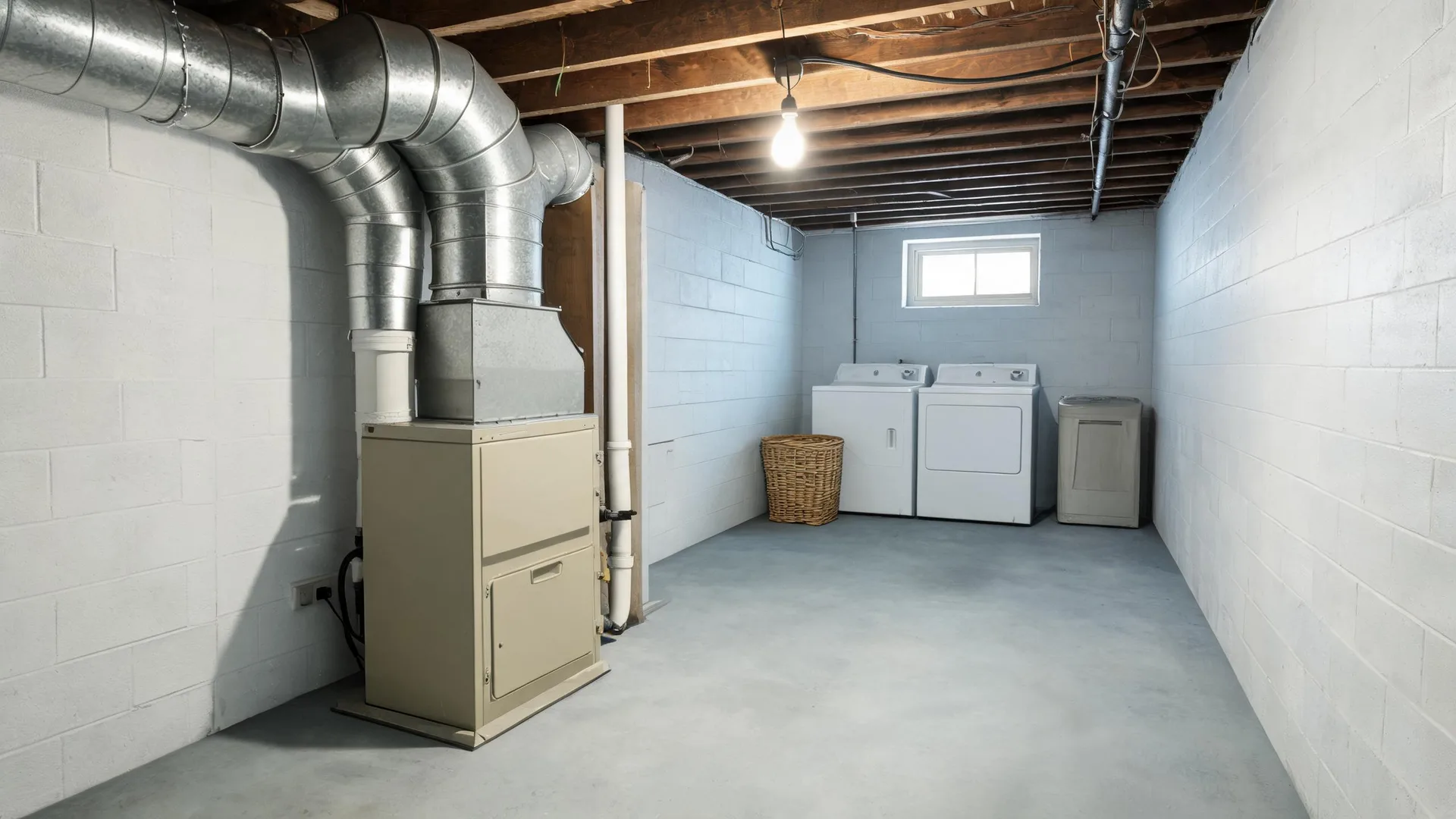
Installation starts with the old furnace coming out, along with anything that's being replaced with it, the flue, the plenum connections, sometimes the gas line fittings. The crew sets the new furnace, squares it up, and ties it into the ductwork, the gas line and the vent. Electrical and control wiring gets connected next, the thermostat wire included, so the board can talk to the blower and the igniter. Once it's all connected, the gas line gets pressure tested for leaks before anything is fired up. Then the furnace runs through a full cycle while the contractor checks the flame, the airflow at the registers and the temperature rise, and adjusts what needs adjusting. A straightforward swap, same location, same ducting, is usually a single day's work. If ductwork needs resizing or repair first, that adds time before the furnace itself ever gets set.