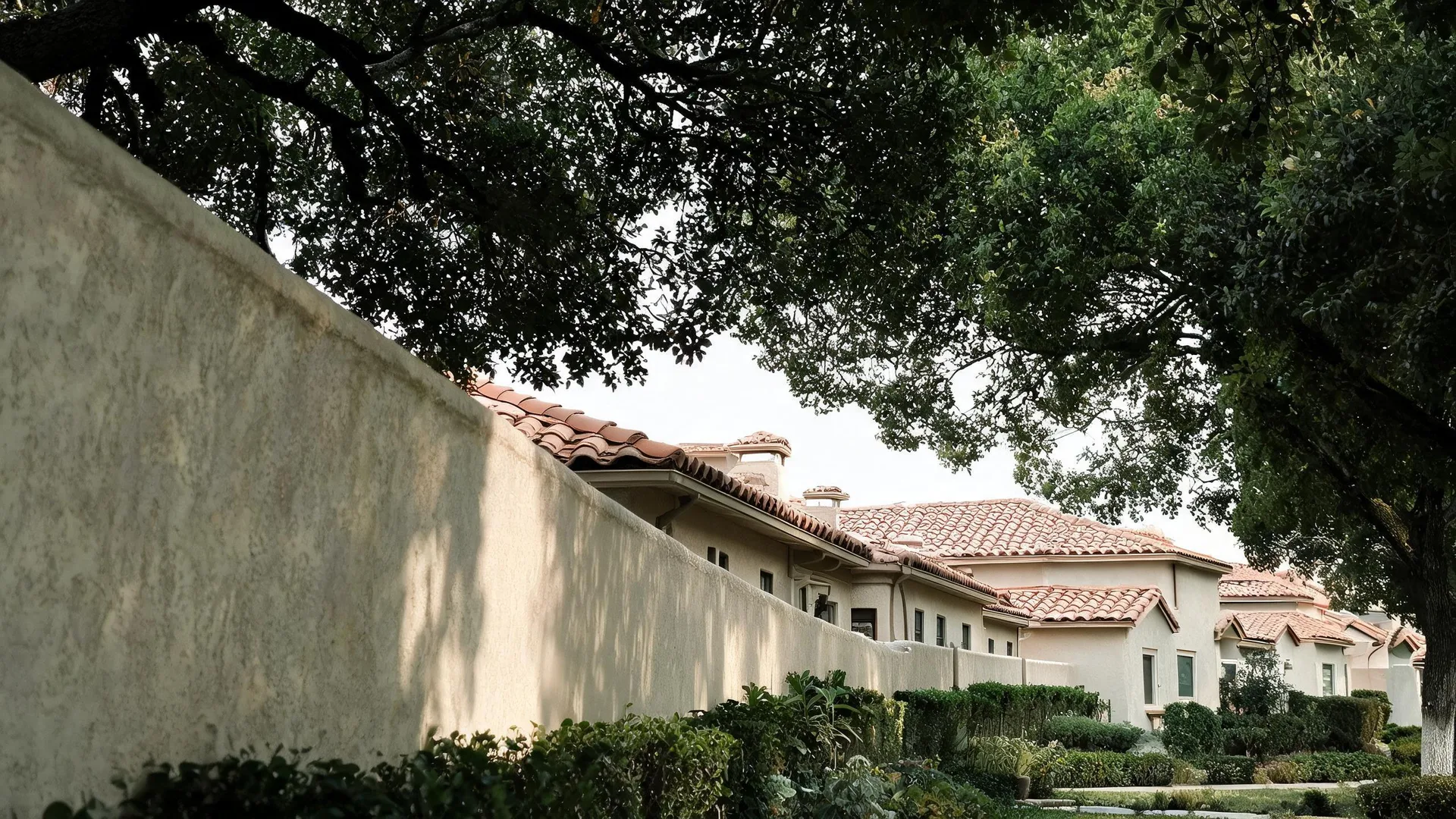





A long stucco wall recedes along the left side toward stucco houses with red clay tile roofs, framed by overhanging tree branches and low shrubs.

Furnace Maintenance in San Diego, CA

Tell us about the job

Takes about a minute. No obligation.

Tune-up, service, or cleaningFurnace or heatingSan Diego County, CA
Step 1 of 2

What ZIP code is the job in?

A furnace that needs a look usually tells you before it quits. Listen for a burner that ticks longer than usual before it catches, or a flame that looks yellow instead of steady blue. Watch for a cycle that runs short, shutting off before the room actually warms up. A burning smell the first time you turn it on for the season is normal for a minute, but it should fade fast, not linger. If the blower kicks on louder than it used to, or the air coming out feels weaker than it should, something inside is working harder than it needs to. None of these mean the furnace is about to fail. They mean it's asking for a look before whatever is starting turns into a repair.

A quick tune-up checks that the furnace turns on and the flame looks right.

A thorough one pulls the burners, checks the flame sensor, and tests the gas pressure, because a cracked heat exchanger or a dirty sensor won't show up any other way.

Half the furnaces here are younger than the house next door's roof, and a yearly check is what keeps them that way

Half the homes here were built by 1980
Heat runs November through April
Winter nights average 41°F
Most furnaces here run on gasUtility gas heats 53.7% of San Diego County homes, more than any other fuel.

Furnaces here sit idle most of the year, then get asked to run hard starting in November. October is when to get the check done, right before that happens. A furnace that's been off since spring can have a cracked heat exchanger, a dirty flame sensor, or a clogged burner that never shows up while it's sitting unused. The only way to catch it is to run the thing and look. Wait until November and you're finding out what's wrong on the first cold night, with the furnace already carrying the load.

Keep it in good shape

If your system is fairly new, a yearly check keeps it in good shape for longer.

Find a contractor
A gray high-efficiency gas furnace installed in an unfinished basement, surrounded by gas lines, a condensate drain, and sheet-metal ductwork.

A newer furnace still needs the yearly look

A furnace that went in with a newer build still has most of its working life ahead. The yearly check is what that life gets spent on well instead of losing to a part that failed quietly. The same visit that catches a cracked heat exchanger early is the one that keeps a newer furnace starting up the way it did the first winter, year after year.

Change the filter

A dirty filter is the one thing worth checking on your own. Pull it out and hold it up to the light. If you can't see through it, swap it. A clogged filter starves the furnace of airflow, and that makes the heat exchanger run hotter than it should.

Keep the area around it clear

Don't stack anything against the furnace or block the vents going into the room it sits in. A furnace needs air to pull in for combustion. Boxes or stored items too close can also become a fire hazard once the burners are running for hours at a stretch.

A tune-up opens the furnace up and looks at what the thermostat can't tell you. A technician pulls the burners and checks for rust or a flame that's burning uneven across them, a sign the heat exchanger underneath is starting to go. The flame sensor comes out and gets cleaned, since a coated sensor is what makes a furnace shut off a few seconds after it starts, long before it's bad enough to fail outright. Gas pressure gets tested too low and the furnace runs cool and inefficient, too high and it's stressing the heat exchanger every time it fires. None of that shows up as a symptom you'd notice from the next room. The furnace just keeps running, a little worse every winter, until the part that was failing quietly finally doesn't start at all.

The inducer motor and blower both get checked for play in the bearings, since a motor that's starting to go will still run, just louder and hotter than it should. The condensate line gets cleared on a furnace that has one, because a clog there can back up and trip a safety switch for no reason anyone can see from the thermostat. Electrical connections get tightened, too, since a loose one can cause a furnace to cut out mid-cycle and start right back up as if nothing happened. The technician also checks that the furnace is venting correctly, that exhaust is actually leaving the house instead of finding its way back in. Each of these is a small thing on its own. Skip the check for a few years and they stack up into the kind of failure that looks sudden but wasn't.