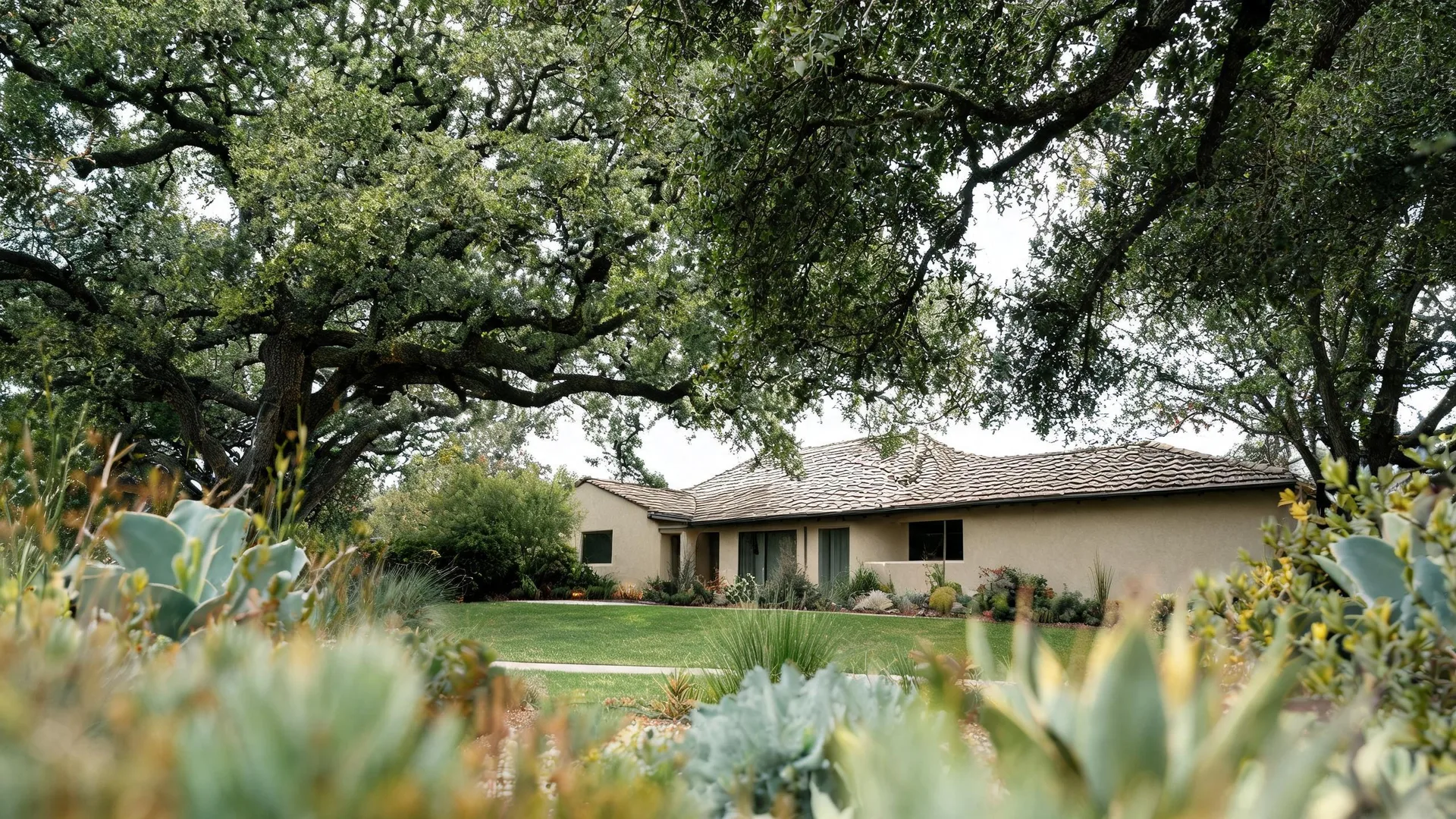






A single-story stucco house with a shingled roof sits behind a lawn, framed by large spreading oak trees and foreground agave and succulent plantings.

Furnace Maintenance in Stockton, CA

Tell us about the job

Takes about a minute. No obligation.

Tune-up, service, or cleaningFurnace or heatingSan Joaquin County, CA
Step 1 of 2

What ZIP code is the job in?

Your furnace in Stockton only has six months of work ahead of it, November through April. Overnight lows average 40°F through December, January and February, mild compared to places where furnaces fight single digits all winter. That lighter load means less strain on the parts that do the work each time it fires. But it still fires every day for six months straight, and age catches up to those parts whether the duty was hard or easy. A yearly check is what finds the weak part before it quits on you.

Half the homes in San Joaquin County were built in 1984 or later.

A furnace that age still has a lot of working life left, and a yearly check is what gets it there.

Most of Stockton heats with gas, and gas heat needs more than a filter change

61.6% of homes heat with gas
Climate zone 3B
Heat runs November through April
Stockton runs its furnace starting NovemberFurnace season here starts in November. Have it checked in October.

A yearly check on a furnace this age and this lightly worked is mostly about catching the small stuff before it becomes the big stuff. A technician checks the igniter and the flame sensor, and watches the burners fire to make sure they're burning clean. They'll check the blower too, since that's what moves the heat through the house. None of that takes long. The point isn't to fix something that's broken. It's to find the one part that's close to failing while it's still an easy fix, not an emergency call during the first cold week of the year.

Keep a newer furnace running like one

A furnace built in 1984 or later still has plenty of life in it, and a yearly check is how it stays that way. Get yours looked at before the cold sets in.

Find a contractor
A man in a dark jacket and tan pants, seen from behind, carries a canvas tool bag up concrete steps toward a blue front door of a house with light horizontal siding and a potted shrub in a blue planter.
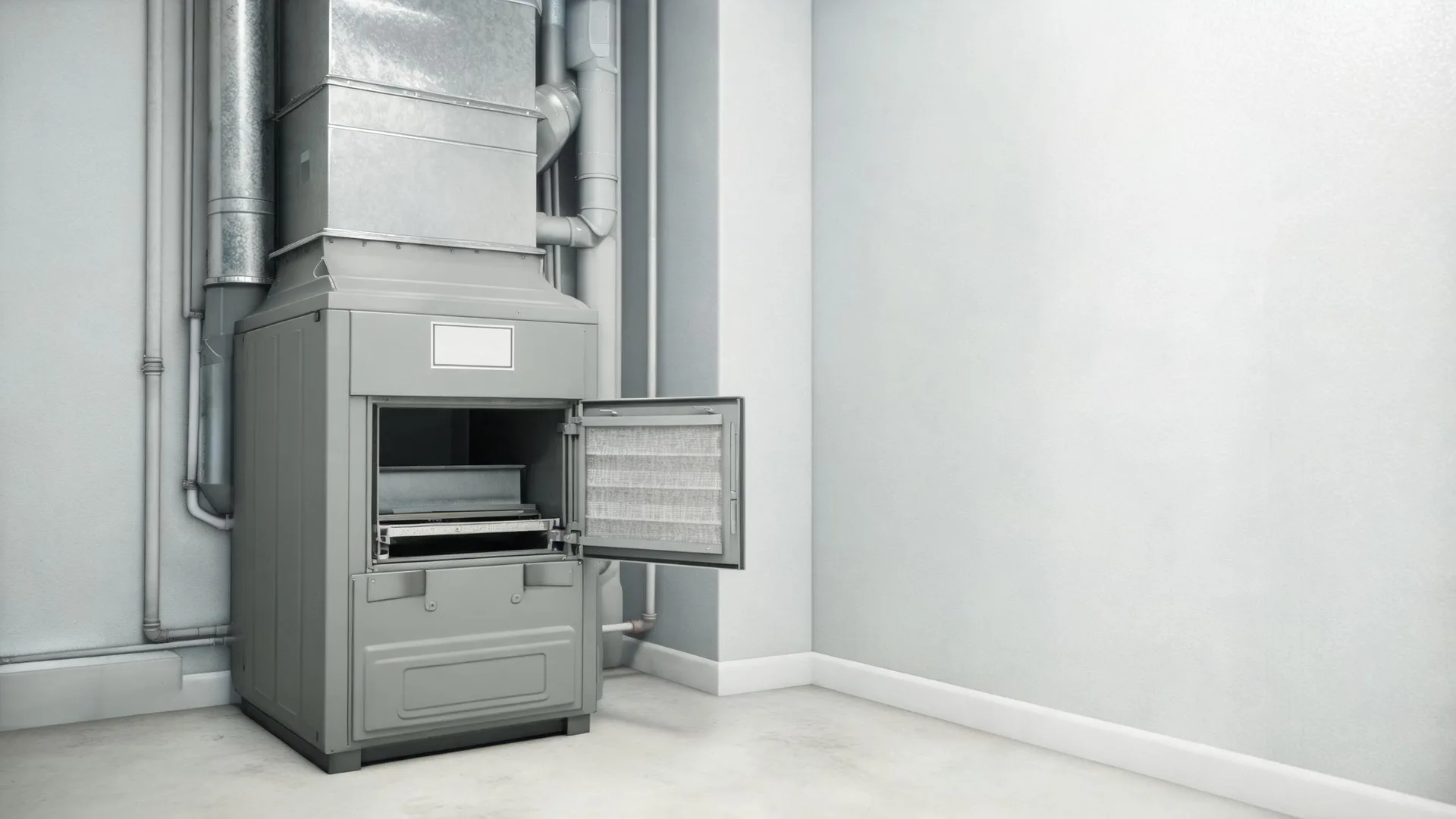
A gray residential gas furnace installed in an unfinished basement, connected to sheet-metal ductwork and PVC pipes.

Skipping it doesn't feel like anything, until it does

Skip the yearly check and nothing happens right away. That's what makes it easy to put off. A furnace with a cracked heat exchanger or a weak capacitor will still fire and still heat the house, for a while. Dust keeps building on the blower wheel. The flame sensor keeps picking up a thin coat of residue it was never cleaned of. The furnace just works a little harder each time it runs to make up for it. None of that announces itself. What ends it is usually sudden. The sensor finally can't detect the flame and shuts the burners down, or the capacitor that's been weakening all along just stops getting the motor started. By then it isn't a small fix anymore. It's a no-heat call.

A quick one stops at the filter

Some visits are over fast because the tech changed the filter, glanced at the flame through the window, and called it done. That catches almost nothing. A furnace can run with a dying capacitor or a loose wire at the control board right up until it doesn't, and a fast look at the outside of the unit won't find either one.
A thorough one opens things up

A real tune-up means pulling the blower out to check the wheel and the bearings, pulling the burner cover to watch the flame up close, and testing gas pressure at the valve instead of guessing from how the furnace sounds. If nobody opened a panel or pulled a part, they checked that the furnace runs, not that it's going to keep running.

A technician checks things you'd never think to look at. One is the flame itself. A clean burner flame is steady and blue, and a yellow or flickering flame can mean incomplete combustion, which is a safety issue, not just a performance one. They'll also test the flue and venting to confirm exhaust is actually leaving the house instead of backing up. Electrical connections loosen over a year of the furnace heating up and cooling down, and a loose wire at the blower or control board can cause a failure that looks random until someone traces it back. They'll also check the gas pressure at the valve, since pressure that drifts too high or too low changes how the burners fire even when everything looks fine from the outside. None of this shows up by looking at the furnace from across the room.

A tune-up also means pulling the blower assembly and checking it by hand, not just listening to it run. The wheel can collect dust on its blades the same way a fan does, and that buildup throws it slightly off balance even when it still spins fine. A technician will check the bearings for play and oil them if the motor calls for it. Most furnace blowers today run direct drive with no belt, but a technician confirms that rather than assuming it. Capacitors get tested too. A capacitor that's weakening still starts the motor most days, right up until the day it doesn't, and that's the kind of failure a yearly check catches before it turns into a cold house.